


Required Documents for Tunisia Visa from Oman: A Practical Guide
- Nathifa Shadid
- Jan 13
- 4 min read

Traveling to Tunisia from Oman can be straightforward if you know what to prepare. This guide walks you through the exact documents you need for a Tunisia Visa from Oman, with tips and warnings from real-world experience. This isn’t a generic checklist—you’ll get practical insights you won’t find on official forms.
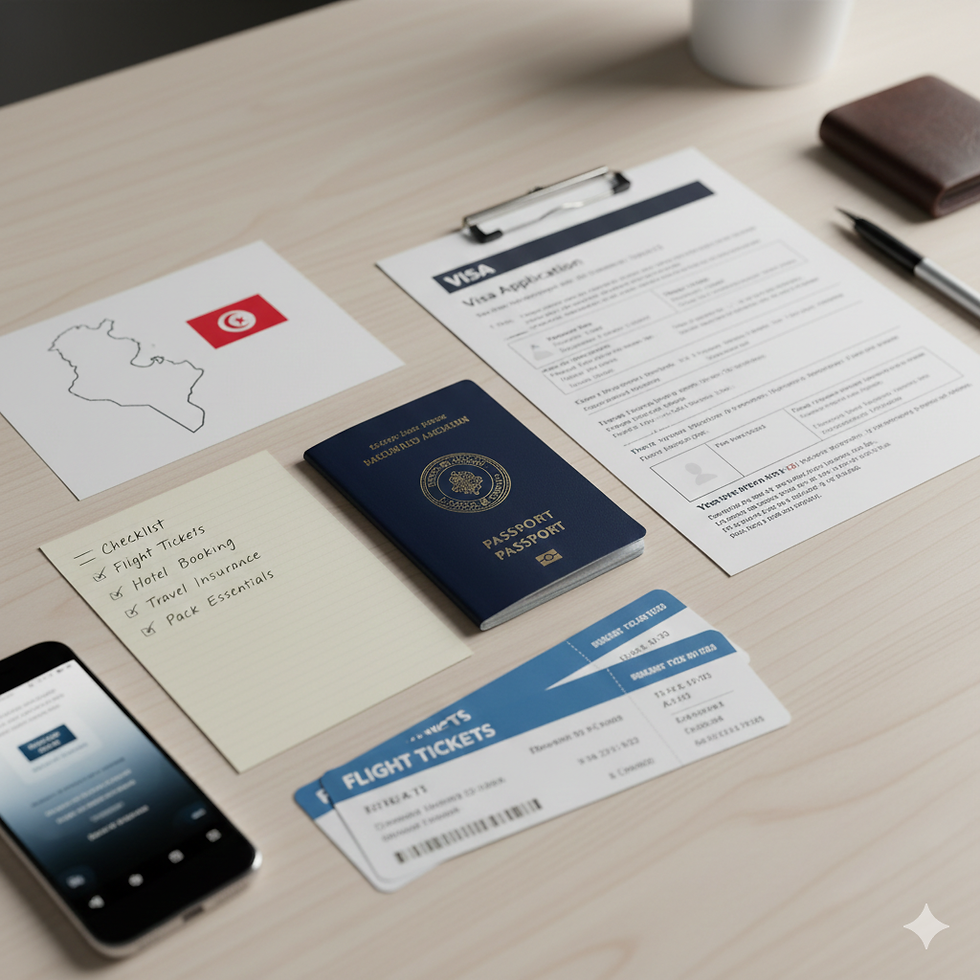
1. A Valid Passport
Your passport must be valid for at least six months from your date of entry.
Make sure it has at least two blank pages. Airlines and border officers check this carefully.
Warning: Travelers sometimes overlook minor damages to the passport cover or corners. While it seems trivial, some embassies can reject applications for a slightly torn passport.
Tip: Always carry a digital copy of your passport. You might need it at the airline counter or if you misplace the physical copy.
2. Completed Visa Application Form
Fill out the Tunisia visa application form accurately. Minor mistakes, like misspelling your name or entering the wrong date of birth, can cause delays.
Observation: This is where most travelers get confused. Online forms sometimes auto-fill in English, but official documents must match exactly as on your passport.
Tip: Double-check dates, spellings, and your nationality before submission.
3. Recent Passport-Sized Photographs
Generally, two to three photos are required, in color, with a white background.
You might not realize this at first, but photo size and quality matter more than you think. Grainy or improperly cropped photos can get your application returned.
Tip: Use a professional studio familiar with embassy requirements.
4. Proof of Travel Itinerary
Flight bookings to and from Tunisia are usually required. Even if you haven’t purchased tickets yet, a confirmed itinerary or reservation is needed.
Real-world scenario: Some travelers assume a return date isn’t mandatory. At Tunis-Carthage Airport, officers often ask to see return confirmation, especially for short-term visas.
Tip: Use a reputable travel agency or airline to get a reservation that can be canceled if needed.
5. Hotel Reservations or Accommodation Proof
Embassy or consulate officers want to see where you’ll be staying. A confirmed hotel booking is the easiest proof.
Warning: Airbnb confirmations can sometimes be questioned. If you’re using one, print the booking and any host communication.
Tip: Keep copies of multiple nights if your stay spans several locations.
6. Proof of Financial Means
Bank statements for the last three to six months are standard. They should show that you can cover your expenses during the trip.
You might not realize this at first, but officers often check for regular income deposits, not just a large lump sum. Irregular patterns can trigger extra questions.
Tip: Include a brief explanation of deposits if needed—like salary or business income.
7. Travel Insurance
A valid travel insurance policy covering medical expenses and emergencies is usually required.
Observation: This is where travelers underestimate the fine print. Some policies exclude certain countries or don’t cover COVID-related expenses. Always verify that Tunisia is explicitly included.
Tip: Carry both digital and printed copies of your insurance policy.
8. Proof of Employment or Business
For employees: a letter from your employer stating your position, salary, and approved leave dates.
For business owners: a copy of your trade license or company registration.
Real-world insight: If the letter is vague, consular staff may call your office. It’s better to be precise.
Tip: Include contact details of the employer or company representative.
9. Visa Fee Payment Proof
Fees are usually paid at the embassy or online during application submission. Keep the receipt.
Warning: Some travelers assume online confirmation is enough. Check if the embassy requires the original receipt when submitting documents.
10. Additional Documents for Specific Cases
Minors: Birth certificate, notarized parental consent, and parents’ passports.
Frequent travelers: Copies of previous visas can help, especially for Schengen or Middle East countries.
Special visas: Business or student visas may require invitation letters or admission confirmation.
Tip: Always read the latest requirements on the Tunisian Embassy website. Rules can change, and missing one document can delay your trip.
11. Submission and Follow-Up Tips
Submit documents in person or through an accredited travel agent. Some embassies allow courier submission.
Track the application online if possible. Processing can vary from a few days to two weeks.
Observation: In real environments, this rarely works as expected. Holidays, staff shortages, or incomplete forms can delay your visa, so plan accordingly.
12. At the Airport
Keep all documents organized in a folder for easy access at check-in and immigration.
Officers may ask questions about your itinerary or proof of accommodation. Be concise and honest.
Real-world example: Some travelers face delays at Tunis-Carthage Airport because their hotel confirmation didn’t match the dates on the visa application. Double-check these before departure.
Practical Advice
Make photocopies of all documents. One set for submission, one set for travel.
Keep digital backups on your phone or cloud.
Start the visa process at least 3–4 weeks before departure. Even minor mistakes can push your travel dates back.
Consult your airline for any transit visa requirements if you have a layover in another country.
Common Pitfalls
Assuming online forms automatically sync with embassy records. Always print a copy.
Ignoring minor details like passport corner damage or mismatched dates.
Waiting until the last minute to gather bank statements or employment letters.
Using informal accommodation proof without confirmation emails or receipts.
Tip: Small mistakes often cause more delays than big ones. Check everything twice.
Conclusion:
Getting a Tunisia Visa for Oman Citizens is mostly straightforward if you follow the checklist and pay attention to details. Carrying all the right documents, keeping digital and physical copies, and verifying every minor requirement can save you stress at both the embassy and the airport.
You might not realize this at first, but preparation is half the journey. Once the paperwork is in order, traveling to Tunisia is smooth, and you can focus on exploring the country rather than worrying about visa issues. A little attention to detail upfront prevents big headaches later.


Comments